
Hengistbury Head: Walks, Wildlife and Views
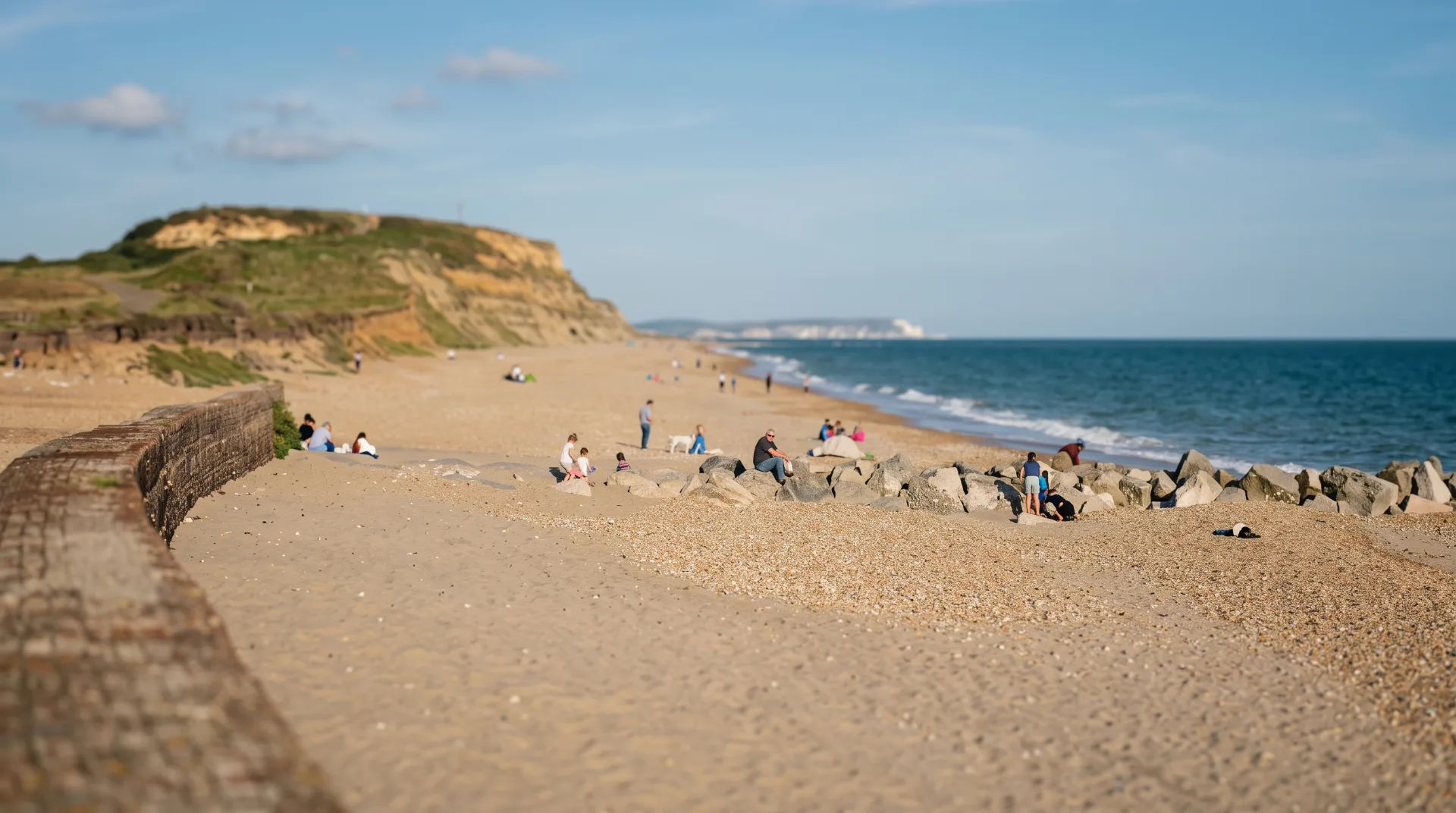
Hengistbury Head walks offer a wonderful way to explore this low, heather-covered headland at the far eastern end of Bournemouth Bay. It marks the point where the town’s tidy seafront gives way to a wilder, more ancient landscape. This special place is a nature reserve, a protected archaeological site, and home to some of the finest short walks in the area, all rolled into one.
At a glance
- Hengistbury Head lies just beyond Southbourne, guarding the entrance to Christchurch Harbour.
- A steady climb up Warren Hill offers rewarding panoramic views, including the Isle of Wight on clear days.
- Seasonal land train and small ferry services provide easy access for those who prefer not to walk.
- The summit is exposed to the elements, so sturdy footwear and windproof clothing are recommended.
Walking to the top: Hengistbury Head walks for all abilities
Starting from the car park and visitor centre near the beach huts, the main path gently follows the harbour’s edge before ascending inland. The climb up Warren Hill is short but steady. Reaching the summit is well worth the effort. From here, you can enjoy one of the broadest views along this stretch of coast. The sweeping bay with Bournemouth Pier lies in the distance one way, and Christchurch Harbour’s reed beds the other. Along the route, benches invite you to pause and take in the scenery at a relaxed pace.
Hengistbury Head walks provide a variety of routes suitable for different levels of fitness and interest. For those who prefer a gentler option, a flat path runs along the harbour side towards the sandspit and back. This route is suitable for pushchairs and anyone seeking an easier walk. The paths here are firm and mostly level, making it accessible for families and casual walkers.
Choosing your route on Hengistbury Head walks
For a fuller experience, a circular trail includes the summit, the old quarry, and the seaward cliffs. This covers roughly two miles depending on your exact route. The paths vary from firm to sandy and uneven, so trainers or walking shoes are advisable over sandals. The circular route offers a chance to see the headland’s diverse habitats and dramatic coastal views.
The route takes you past ancient earthworks and remnants of the old quarry, offering a glimpse into the headland’s industrial past. The seaward cliffs provide spectacular views across the bay and are a favourite spot for photographers and nature lovers alike.
Out to Mudeford Spit: Extending your Hengistbury Head walks
Extending beyond Hengistbury Head, Mudeford Spit is a narrow finger of sand stretching across the harbour mouth towards Mudeford. This is where you’ll find the famous beach huts, a tightly packed row of brightly painted cabins that are among the most sought-after in the country.
Walking out to the end of the spit is a fair distance. Many visitors opt to ride the seasonal land train from near the visitor centre before strolling back at their leisure. The land train is a fun and convenient way to cover the longer distance without tiring little legs.
At the spit’s tip, a small ferry crosses the harbour mouth to Mudeford Quay. Ferry times vary with the season and tides, so it is important to check schedules before you travel. The harbour side beach is calm and shallow, ideal for paddling and families. By contrast, the seaward side faces the open bay with stronger currents. For safety, keep children close near the harbour entrance and never attempt to swim across the channel.
Wildlife and history along Hengistbury Head walks
Hengistbury Head is steeped in history, having been inhabited for thousands of years. It once served as an important Iron Age trading port. Interpretation boards and the visitor centre provide insight into this rich past. The entire site is protected for both its archaeological significance and its valuable natural habitats.
The heathland and harbour attract a variety of birdlife. Visitors can expect to see waders feeding on the mudflats, warblers flitting through the scrub, and migrating birds stopping over in spring and autumn. The headland acts as a vital first or last landfall for many species. Bringing binoculars is recommended for birdwatchers. It is important to respect roped-off areas set aside for nesting birds.
The heath also supports rare insects and reptiles, including sand lizards and various butterfly species. The mix of heath, scrub, and grassland habitats makes Hengistbury Head walks a rewarding experience for wildlife enthusiasts.
A note on the weather: the summit of Hengistbury Head is genuinely exposed to wind and weather. Even when it is calm in Bournemouth town, it can be breezy or blustery at the top. It is wise to bring an extra layer year-round. Also, keep well back from the fragile, crumbling seaward cliffs to stay safe.
Making a day of it with Hengistbury Head walks and beyond
Hengistbury Head makes a perfect day out when combined with a stroll along Southbourne Beach. This peaceful stretch of sand leads towards the headland from the west. The beach is family-friendly and quieter than Bournemouth’s main seafront.
Alternatively, you can explore the historic town of Christchurch with its priory and harbour just across the water. Christchurch offers charming streets, independent shops, and riverside cafés, making it a lovely complement to your visit.
For practical information including opening times, how to find the visitor centre, and more detailed walking routes, see the dedicated Hengistbury Head listing. To discover other local attractions and days out, visit our things to do section.
Tips for enjoying Hengistbury Head walks safely and comfortably
- Wear sturdy footwear suitable for uneven terrain. The paths can be sandy or rocky in places.
- Bring windproof clothing, especially if you plan to reach the summit or walk along the exposed cliffs.
- Check ferry and land train times in advance if you want to use these services.
- Carry binoculars if you want to spot the diverse birdlife.
- Respect all signage and fenced-off areas to protect wildlife and archaeological sites.
- Take water and snacks, as there are limited facilities on the headland itself.
- Dogs are welcome but should be kept under control, especially near wildlife habitats and nesting areas.
How to get to Hengistbury Head for your walks
Hengistbury Head is easily accessible by car, with a car park and visitor centre near the beach huts. There are also bus routes from Bournemouth and Christchurch that stop nearby. For those travelling by train, Bournemouth station is the closest mainline station, from where local buses or taxis can be taken.
Seasonal land train and ferry services provide additional options for reaching the headland and Mudeford Spit. These are popular in the warmer months and add a charming touch to your visit.
Hengistbury Head walks: a natural and historic treasure
Whether you are seeking a gentle stroll or a more challenging circular walk, Hengistbury Head walks offer something for everyone. The combination of stunning coastal views, rich wildlife, and fascinating history makes it one of Dorset’s most special places to explore on foot.
The headland’s unique geography and protected status ensure that it remains a haven for wildlife and a peaceful escape from the bustle of nearby Bournemouth. It is a perfect destination for families, nature lovers, and anyone wanting to connect with Dorset’s natural heritage.
For more background on Hengistbury Head’s history and environment, see the Wikipedia page on Bournemouth. For official visitor information and conservation details, visit the BCP Council website. To plan your wider Dorset visit, including other nature reserves and coastal walks, check Visit Dorset.
!The promenade above Bournemouth beach
!Hengistbury Head heathland and harbour view